


FGMN Nursery
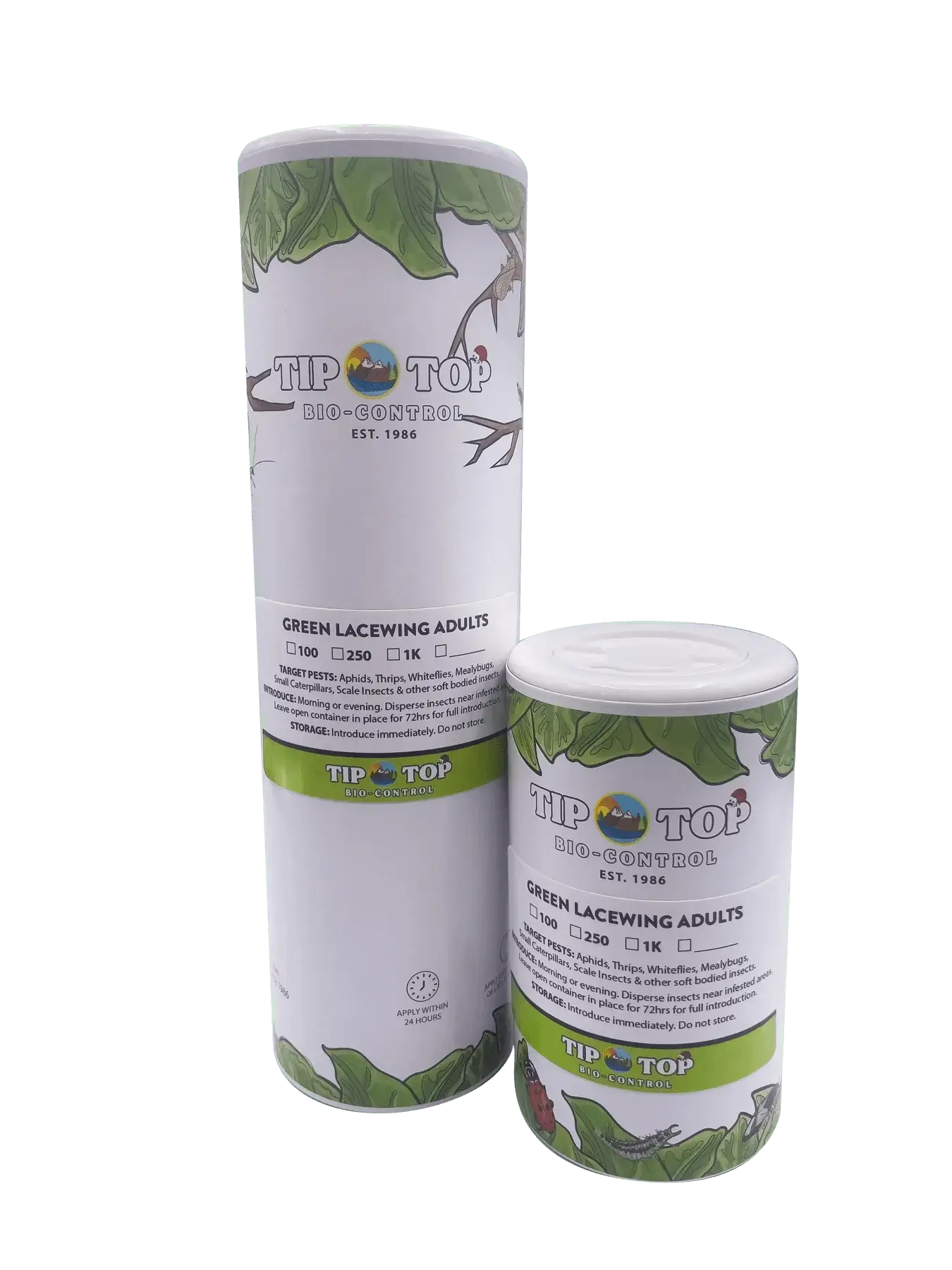
Green Lacewing Adults
Green Lacewing Adults
無法載入取貨服務供應情況
How Do You Get Rid of Aphids (and Their Friends) Long Term?
Sprays knock them down. So do ladybugs—for a few days.
But if you’re looking for lasting biological control—something that doesn’t quit after the first round—lacewing adults are where you start.
Each female lays up to 200 eggs directly near aphid, thrips, or whitefly clusters. A few days later, those eggs hatch into lacewing larvae—nicknamed aphid lions—that feed nonstop for 2–4 weeks on soft-bodied pests.
Green Lacewing Adults
Long-Term, Self-Replicating Control for Aphids, Thrips, and Whiteflies
Adult lacewings don’t kill pests directly—but they lay the predators that do.
They also feed on nectar, pollen, and honeydew—supporting pollination and ecosystem balance while helping you build lasting, spray-free suppression.
This is a plant-friendly, pollinator-safe, lifecycle-based tool for growers who want the long game—not the reset button.
What They Help Control
| Pest | Stage Targeted (via larvae) |
|---|---|
| Aphids | All stages |
| Thrips | Larvae and adults |
| Whiteflies | Eggs, nymphs, and adults |
| Mealybugs | Crawlers and soft-bodied nymphs |
| Spider mites | Opportunistic |
| Soft-bodied insect eggs | Wherever larvae can find them |
Note: The adults lay the eggs. The larvae do the hunting.
Why Use Lacewing Adults for Long-Term Control?
| Feature | Why It Matters |
|---|---|
| Built-in lifecycle | Eggs hatch into larvae, which suppress pests over time |
| Low effort | Release once; let them lay eggs where the pests are |
| Dual benefit | Adults support pollination while larvae feed |
| Clean and scalable | Suitable for greenhouses, orchards, vineyards, and gardens |
| Zero residue | No sprays, no re-entry interval, no damage to plants |
This is biocontrol that multiplies in the field—not something you have to re-release every week.
Best Used For
-
Greenhouses, gardens, orchards, vineyards
-
Recurring aphid pressure on ornamentals or food crops
-
Soft-bodied pest complexes (aphids + whiteflies + thrips)
-
Growers focused on pollinator safety and sustainability
-
IPM programs that need biological persistence over fast reaction
How They Work
-
Adults lay eggs near pest colonies
-
Eggs hatch in 2–7 days
-
Larvae feed aggressively for 2–4 weeks
-
Adults feed on pollen, nectar, and honeydew to support beneficial insect activity
-
Some adults may overwinter and return the following season (in outdoor use)
How Much to Release
| Use Case | Rate |
|---|---|
| Small-scale prevention | 1 adult per 10 sq. ft. |
| Large gardens or beds | 500–1,000 adults per 1,000 sq. ft. |
| Full-scale application | 5,000 adults per acre |
Adjust based on pest pressure, plant density, and whether you’re releasing in stages or all at once.
Application Tips
-
Release immediately upon arrival—these are live, active adults
-
Time it right – Early morning or evening is best (avoid midday heat)
-
Distribute gently – Tap the container to let adults fly out naturally
-
Feed them if needed – Add a protein-rich diet to boost longevity in low-pollen environments
-
Avoid sprays – Any pesticide residue can reduce survival and egg laying
Shipping & Storage
-
Ships overnight with live arrival guarantee
-
Do not store—release on arrival
-
If delayed: keep in a cool, shaded place and release within 12 hours
-
Do not refrigerate or expose to direct sunlight


We offer fast and free shipping on most orders over $75 and $8.99 under $75. Orders are typically processed within 1-2 business days and delivered within 3-5 business days unless specified. Expedited shipping options and all pricing options are available at checkout if applicable.
We accept returns within 30 days of purchase. Items must be unused and in original packaging. To initiate a return, please contact our customer service team. Refunds will be processed within 5-7 business days after we receive your return.
Comparison Shop
Comparing Shop Made Easy: Discover new Made in the USA farms and brands for the best products based on price and features. Build your cart or Gift Registry for Free Shipping over $75. Click the "compare" checkbox where applicable.


