


FGMN Nursery
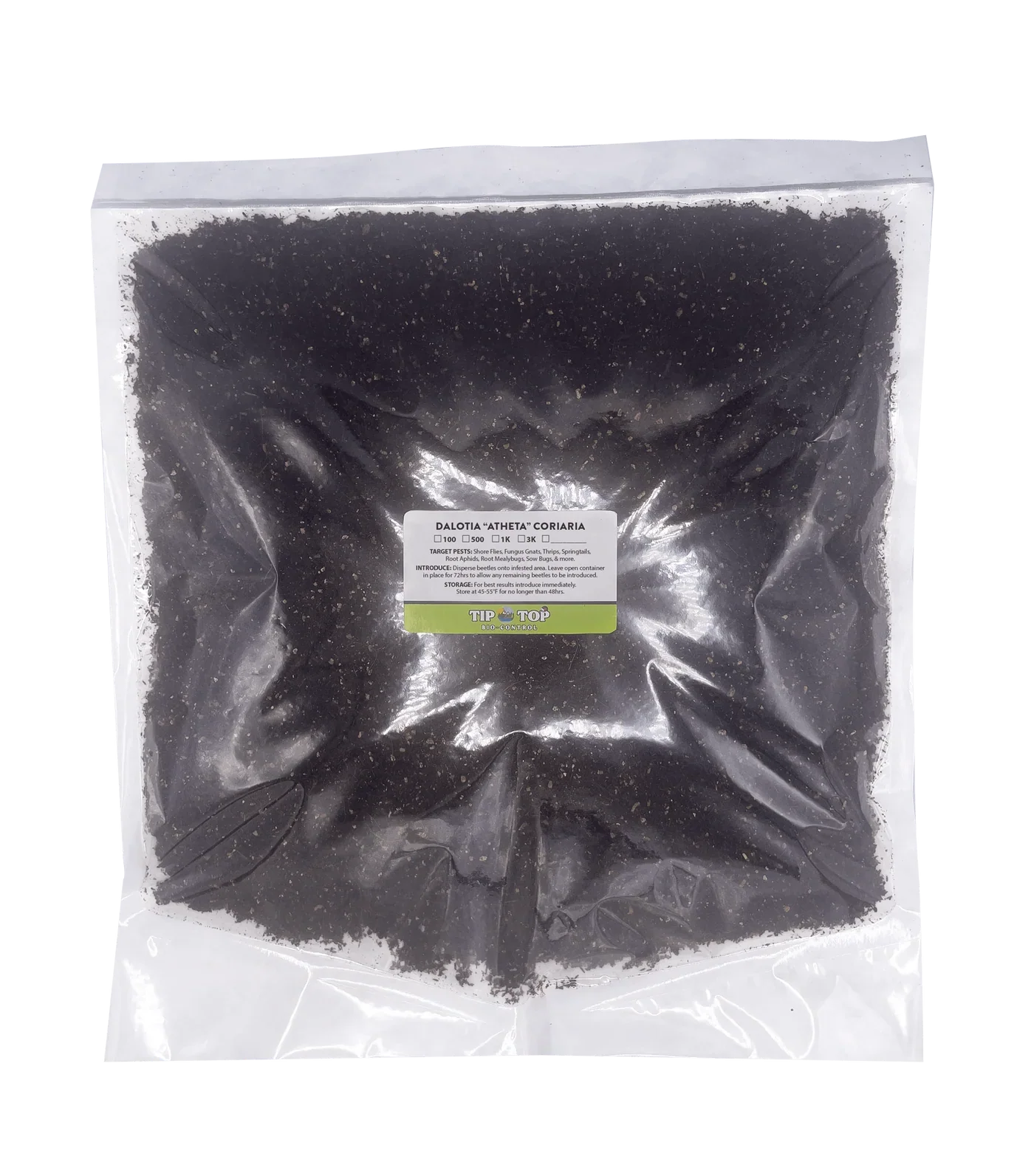
Dalotia coriaria - Rove Beetle
Dalotia coriaria - Rove Beetle
No se pudo cargar la disponibilidad de retiro
Tired of Fungus Gnats? Meet the Beetle That Lives to End Them.
This is Dalotia coriaria, also known as the rove beetle. It doesn’t just suppress fungus gnats—it hunts them down, flips the soil, and ruins their entire reproductive plan.
It works quietly, overnight, and underground. And it works fast.
Dalotia coriaria (Rove Beetle)
Fast-Acting Soil Predator for Fungus Gnats, Shore Flies, and Thrips Pupae
You won’t see Dalotia often—but you’ll know it’s there. Fewer fungus gnats. Stronger roots. No more mystery stunting in your soil-grown plants.
This beetle is highly mobile, nocturnal, and specialized for top-layer substrate hunting. It thrives in peat, coco, leaf litter, worm castings—basically anything with a little moisture and organic matter.
What It Targets
| Pest | Notes |
|---|---|
| Fungus gnat larvae | Primary target. Lives to destroy them. |
| Shore fly larvae | Added bonus—will clean up moist trouble zones. |
| Thrips pupae (in soil) | Complements foliar predators like Swirskii and Andersoni. |
Note: Dalotia does not hunt adult thrips. Pair with foliar predators for full lifecycle coverage.
How It Lives
-
Lifespan: ~3–4 weeks
-
Reproduction: Eggs to adults in under 3 weeks
-
Activity: Mostly nocturnal, fast, and fully uninterested in sticky traps
-
Habitat: Top 1–2 inches of moist soil, mulch, or substrate
This is one of the few biological controls that actually runs down its prey.
How to Use Dalotia
| Use Case | Application Rate |
|---|---|
| Preventative | 1 beetle per sq. ft., every 4–6 weeks |
| Active infestation | 1–5 beetles per sq. ft., depending on severity |
-
Apply directly to the substrate—no need to bury or prep
-
Distribute across beds, pots, or propagation trays
-
Can be combined with nematodes or soil mites—no conflict
Treatment or Prevention?
Both.
-
Use it as a treatment when fungus gnats or shore flies are already active.
-
Use it as prevention in propagation zones, tents, or high-risk areas.
-
Reapply periodically to maintain coverage and reproduction cycles.
Dalotia starts hunting immediately on arrival—and if conditions are right, they’ll reproduce and persist.
Why Choose Dalotia?
| Feature | Advantage |
|---|---|
| Speed | Unlike mites, they cover real ground and chase prey |
| Target-specific | Especially lethal to fungus gnat larvae |
| Reproductive | Builds population over time, unlike nematodes |
| Humidity-flexible | Doesn’t need ultra-humid conditions to work |
| Cooperative | Plays well with mites, nematodes, and other biocontrols |
| Efficient | Active hunters that don’t wait for pests to walk by |
Use Stratiolaelaps for slow, steady coverage. Use Dalotia when you want a hit squad.
Environmental Fit
| Factor | Ideal Range |
|---|---|
| Temperature | 68–85°F |
| Humidity | Flexible; 50–80% preferred |
| Light Sensitivity | Shy during the day, active overnight |
| Substrate Type | Peat, coir, compost, worm castings, etc. |
Grow lights, tents, foggers, or greenhouses—Dalotia adapts. Just don’t let it dry out.
What to Expect
-
You probably won’t see them
-
You’ll stop seeing fungus gnats
-
They’ll reproduce quietly if conditions are good
-
Your root systems will thank you
-
Your sticky traps will suddenly get boring
Shipping & Storage
-
Shipped overnight in a loose carrier mix
-
Includes a mix of adults and larvae
-
Use within 24–48 hours of arrival
-
If needed, store at 50–59°F
-
Do not freeze or expose to heat or direct sun
Good to Know
-
Compatible with nematodes, predatory mites, and lacewings
-
Sensitive to pesticides and soil drenches
-
Can fly (but usually won’t unless overcrowded)
-
Thrives in high-value crop environments, tents, and propagation zones


We offer fast and free shipping on most orders over $75 and $8.99 under $75. Orders are typically processed within 1-2 business days and delivered within 3-5 business days unless specified. Expedited shipping options and all pricing options are available at checkout if applicable.
We accept returns within 30 days of purchase. Items must be unused and in original packaging. To initiate a return, please contact our customer service team. Refunds will be processed within 5-7 business days after we receive your return.
Comparison Shop
Comparing Shop Made Easy: Discover new Made in the USA farms and brands for the best products based on price and features. Build your cart or Gift Registry for Free Shipping over $75. Click the "compare" checkbox where applicable.


