


FGMN Nursery
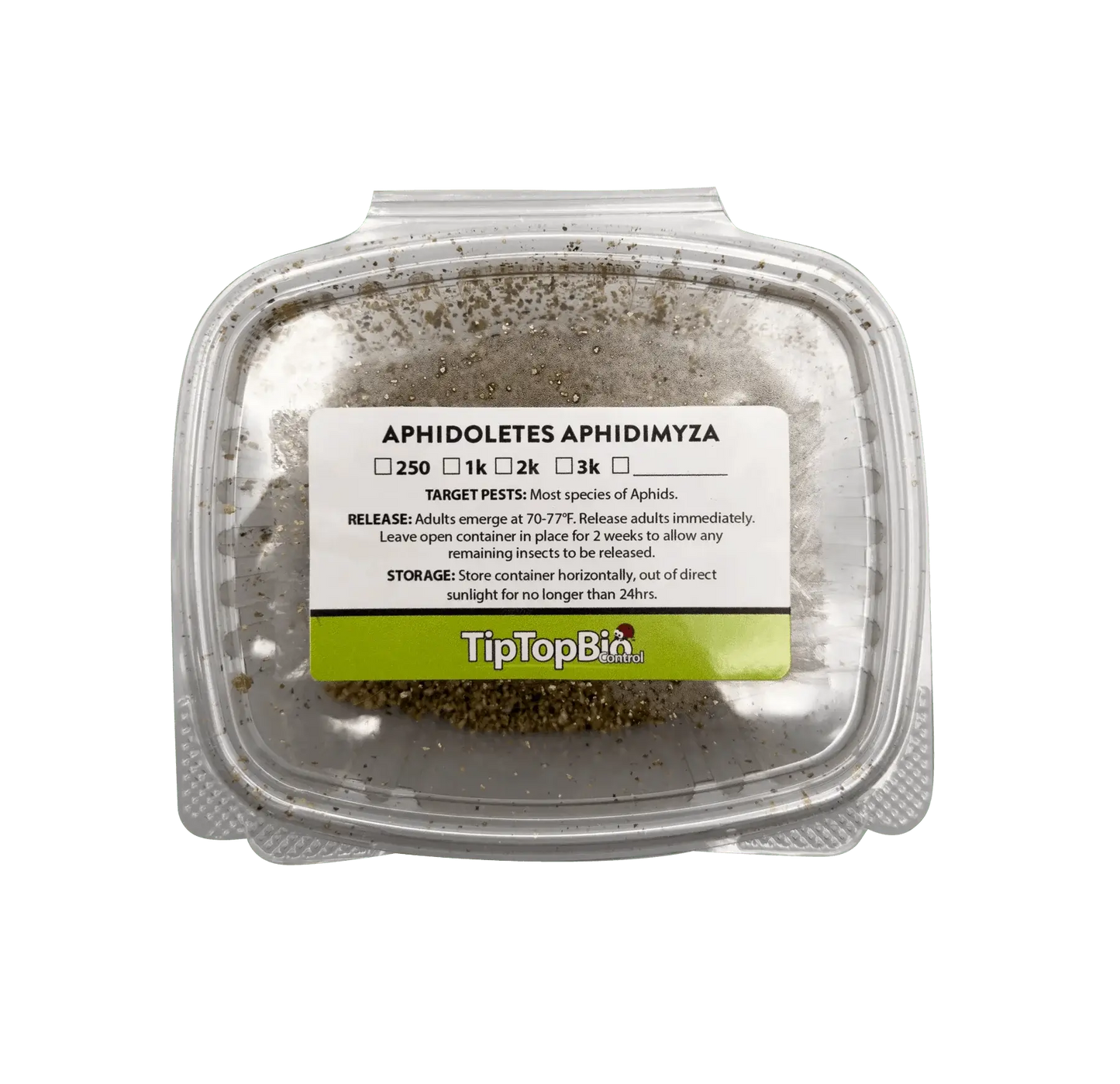
Aphidoletes aphidimyza (Live Nymphs)
Aphidoletes aphidimyza (Live Nymphs)
No se pudo cargar la disponibilidad de retiro
How Do You Kill Aphids Fast? Start With This Predator.
When aphids are multiplying daily, you don’t need slow-release. You need teeth.
Aphidoletes aphidimyza arrives in its active, hunting stage—bright orange nymphs ready to paralyze and feed. Each one can take down up to 65 aphids per day, and they don’t wait. There’s no egg, no pupation delay, no warmup period. Just fast biological control that scales with the infestation.
This is the aphid destroyer you reach for when things are already underway.
Aphidoletes aphidimyza (Live Nymphs)
Fast-Acting Biological Control for Aphid Outbreaks
This bottle contains live nymph-stage predators—not pupae, not eggs, not larvae you’ll need to wait on. They’re ready to hunt the moment you release them.
Targets Over 60 Aphid Species, Including:
-
Black bean aphids (Aphis fabae)
-
Lettuce aphids (Nasonovia ribisnigri)
-
Melon/cotton aphids (Aphis gossypii)
-
Rose aphids (Macrosiphum rosae)
-
Potato aphids (Macrosiphum euphorbiae)
-
Cherry aphids, honeysuckle aphids, and many more
If it's a small to mid-sized aphid feeding on your plants, Aphidoletes is likely to find it and finish it.
Why Nymphs in Bottles?
| Feature | Benefit |
|---|---|
| Immediate action | Feeding begins on contact—no delay |
| No emergence period | Skips the pupation wait of traditional releases |
| Targeted application | Apply directly to infested plants |
| Visible suppression | Results in as little as 3–5 days |
| Field-tested control | Used in greenhouses, gardens, and high-density crops |
This is not a slow-burn option. It’s for growers who need visible decline, now.
How They Work
-
Nymphs begin feeding immediately after release
-
Each nymph injects a paralyzing toxin and consumes the aphid
-
Feeding continues for 7–10 days
-
Afterward, nymphs drop to the soil to pupate
-
Adults emerge in 10–14 days and restart the cycle
This makes Aphidoletes both a short-term treatment and a self-renewing solution—if given the right habitat.
How Much to Use
| Use Case | Suggested Rate |
|---|---|
| General prevention | 1 nymph per 3 square feet |
| High-pressure infestation | 1,000–4,000 nymphs per acre |
| Spot treatment | Apply clusters directly to heavy aphid colonies |
Repeat weekly for 2–3 weeks, or as needed based on rebound.
Ideal Conditions
-
Temperature: 50–88°F
-
Humidity: Moderate to high preferred
-
Habitat: Requires soil or substrate for pupation—don’t use in hydro or sterile surfaces
-
Light: Prefers shaded or protected zones for release
Pro Tips for Best Results
-
Release early when aphid populations are first visible
-
Apply directly to infested leaves or nodes
-
Do not spray—pesticide residues will kill nymphs and adults
-
Leave pupation zones—bare soil, coco coir, or top dressing
-
Pair with Aphidius colemani for full lifecycle coverage (predator + parasitoid)
-
Monitor for the second wave—new adults will continue control in 2–3 weeks
Shipping & Storage
-
Ships overnight with live delivery guarantee
-
Use immediately upon arrival
-
If needed, store at 50–60°F for up to 24 hours
-
Do not freeze or expose to dry air or light
What You’ll Notice
-
Aphids immobilized on stems or leaf undersides
-
Fewer live aphids in 3–5 days
-
No sticky residue or plant damage
-
Midge adults appearing after 10–14 days
-
A second wave of suppression—if pupation conditions are right
This is not a look-but-don’t-touch solution. This is kill-on-contact.


We offer fast and free shipping on most orders over $75 and $8.99 under $75. Orders are typically processed within 1-2 business days and delivered within 3-5 business days unless specified. Expedited shipping options and all pricing options are available at checkout if applicable.
We accept returns within 30 days of purchase. Items must be unused and in original packaging. To initiate a return, please contact our customer service team. Refunds will be processed within 5-7 business days after we receive your return.
Comparison Shop
Comparing Shop Made Easy: Discover new Made in the USA farms and brands for the best products based on price and features. Build your cart or Gift Registry for Free Shipping over $75. Click the "compare" checkbox where applicable.


